
How Do You Build Relationships at Work Without Getting Too Personal?

Why meaningful conversations don't have to cross professional boundaries.

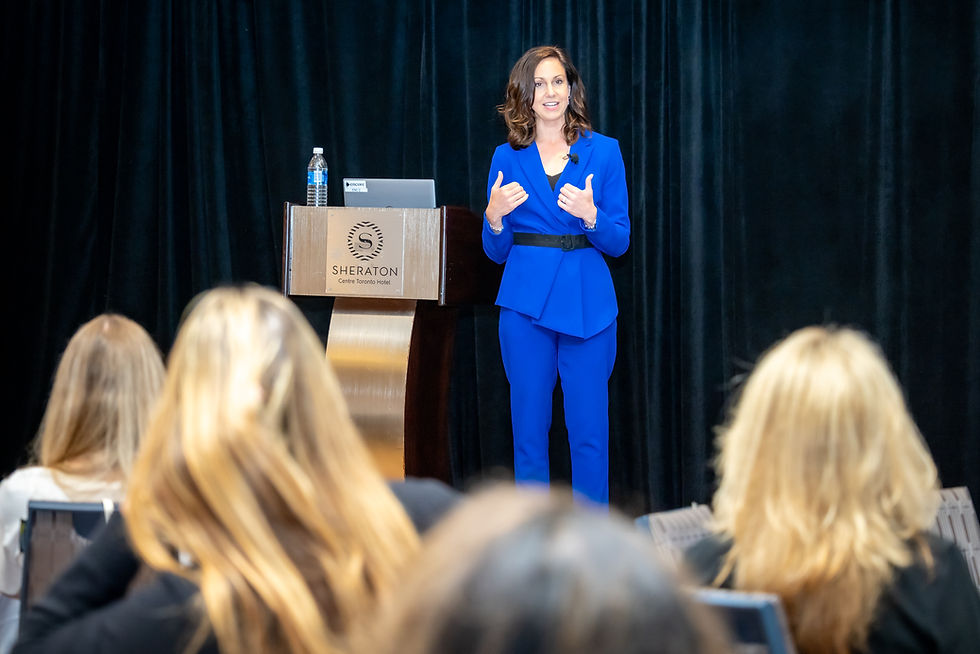
A few weeks ago, I asked a room full of meeting planners a question: What’s stopping you from getting to know the people you work with? I was giving a talk about using curiosity to build real connections with the people around us.
The answers came back fast, and the same one kept coming up. They didn't want to "overstep." They didn't want to cross some invisible line and be seen as unprofessional or offend anyone.
I've thought about that answer a lot since then because, honestly, I don't worry about this anymore. Somewhere along the way, I stopped being afraid of overstepping. What I do know is that my work got better when I started enjoying the people I worked with. And I couldn't truly enjoy working with people without getting to know them.
I remember one client in particular. We had worked together for months. Every conversation was about room blocks, contracts, and timelines. Then one day I asked a simple question that had nothing to do with logistics.
We started our call to review a report, and she apologized for being a few minutes late. Her team had been brainstorming how to merge two events, and the meeting ran long.
So, before we launched into the report, I asked her, “Hey Anna, what do you enjoy most about your job?”
“Oh!” She seemed slightly surprised by the question, and a little excited to think about it at the same time.
She said, “I like the strategy of it. I know my job is a lot of logistics, but my favorite part is starting with the big picture. What are we trying to accomplish? Why are we holding this event? Those kind of questions. And then everything after that makes sense and provides more incentive for making it happen.”
I replied, “How interesting. And it makes sense. Have you always been able to do that in the roles you’ve had?”
Her answer gave me permission to ask another question. We talked about what drew her into the meetings industry, the events she was most proud of, and eventually the families we'd both missed dinners with during busy seasons. None of it felt forced. I hadn't asked anything deeply personal. I'd simply stayed interested long enough for the conversation to become meaningful.
After that meeting, everything changed. The work became easier. We trusted each other more. As I think back to that moment, I wasn't trying to get personal. I was trying to get to know the person behind the project.
So why does something that simple feel so risky? I think there are two reasons.
Why We Hold Back
If you've ever hesitated to ask a question like that, you're not alone. The hesitation isn't a flaw. It isn't a sign that you're bad at people, or too reserved, or behind the times. It's a rational response to a real and confusing set of signals we all receive at work.
Researchers who study fear in organizations have found that employees routinely hold back speech and behavior, including the kind that builds relationships, out of concern for how it might land, even when no actual rule is being broken. Curiosity itself carries risk because it opens us up to rejection. That's uncomfortable for most of us.
The Mistake We’re Making
Here's the mistake I think many of us are making. We tend to use personal and meaningful as if they're the same thing. They aren't.
Most workplace advice warns us away from deeply personal topics, and for good reason. But somewhere along the way, we started assuming that almost any question beyond small talk might cross a line.
And we’re not just imagining it. Surveys have found that close to half of employees believe personal questions from coworkers are inappropriate, even though those same conversations happen all the time. That gap between belief and behavior creates uncertainty about where the line actually sits. And when we're uncertain, we tend to avoid it altogether.
To be clear, this isn't about HR getting it wrong. Workplace training around boundaries and respect exists for good reasons, and it protects people. But caution created to protect a small number of genuinely sensitive topics has a way of spreading until many of us begin treating almost everything beyond small talk as off limits.
Where the Line Really Is
Looking back at my conversation with Anna, we never ventured into deeply personal territory. We simply moved from talking about the project to talking about what mattered to her.
That's because conversations don't have to jump from surface-level to deeply personal. They naturally unfold in layers.
Layer | Example Question | Perceived Risk | Appropriate at Work |
Surface / factual | “How long have you been in this role?” | Very low | Yes |
Preferences / opinions | “What part of your job do you find most rewarding?” | Low | Yes |
Work-related feelings | “What's been the hardest part of this quarter for you?” | Low to moderate | Yes, with rapport |
Values / identity | “What drew you to this industry?” | Moderate | Yes, once trust is built |
Deep personal (health, finances, relationships, politics, religion) | “Are you married? How much money do you make?” | High | Generally avoid unless invited |
Notice where most of our fears live. Almost every "don't ask this at work" question sits in that bottom row: salary, relationships, health, religion, politics. Those topics deserve caution. But connection is usually built in the four layers above, where people can share what they think, value, and enjoy without revealing anything deeply personal.
A few more you can borrow, moving gently down the layers as the conversation opens up:
"What's the best part of your day, usually?"
"What made you want to work in this field in the first place?"
"If you could change one thing about your day, what would it be?"
None of these touch anything high-risk. They just ask for a little more than a status update.
Follow Their Lead
Researcher Amy Edmondson has a name for what’s going on here: psychological safety, the shared belief that it's safe to take a risk in front of the people you work with. When that safety is low, people default to whatever feels safest: small talk, silence, or sticking to business. That's not about who you are as a person. It's a read on the environment, and it can change as trust builds, one conversation at a time.
So watch for it. Start at the surface. If they lean in, ask something back, or light up a little, that's your cue to go one layer deeper. If they stay short or seem guarded, stay right where you are. This isn't a script to push through. It's a conversation to follow.
Why I Stopped Worrying About This
Looking back, I think my comfort with curiosity came from watching leaders who built relationships naturally. I paid attention to how they listened, the questions they asked, the stories they shared, and the way their body language said, “You are the most important person in the room.” Little by little, I realized they weren't crossing professional boundaries. They were simply staying interested long enough for conversations to become meaningful.
I don't think the culture around me changed. I think I did. We’re not carrying around a fixed rule that now applies everywhere. We re-establish it, relationship by relationship, based on how much trust exists with that specific person. That trust gets built through a track record: questions that landed well, conversations that were received with trust rather than suspicion. For me, the worry didn't disappear all at once. It slowly faded, one good exchange at a time, with specific people, in a specific kind of work.
That's really the invitation here. Professionalism was never meant to shut curiosity down. It was meant to protect people from a narrow set of high-risk topics. Without meaning to, many of us simply widened that protection to cover everything, including the questions that would have brought us closer to the people we work with every day.
Start at the surface. Watch how it lands. Go a little deeper when you're invited to. That's not overstepping. It's just showing someone you're interested in them.
Because behind every project is a person. And getting to know the person behind the project is where real working relationships begin.


Comments